


Bio Light
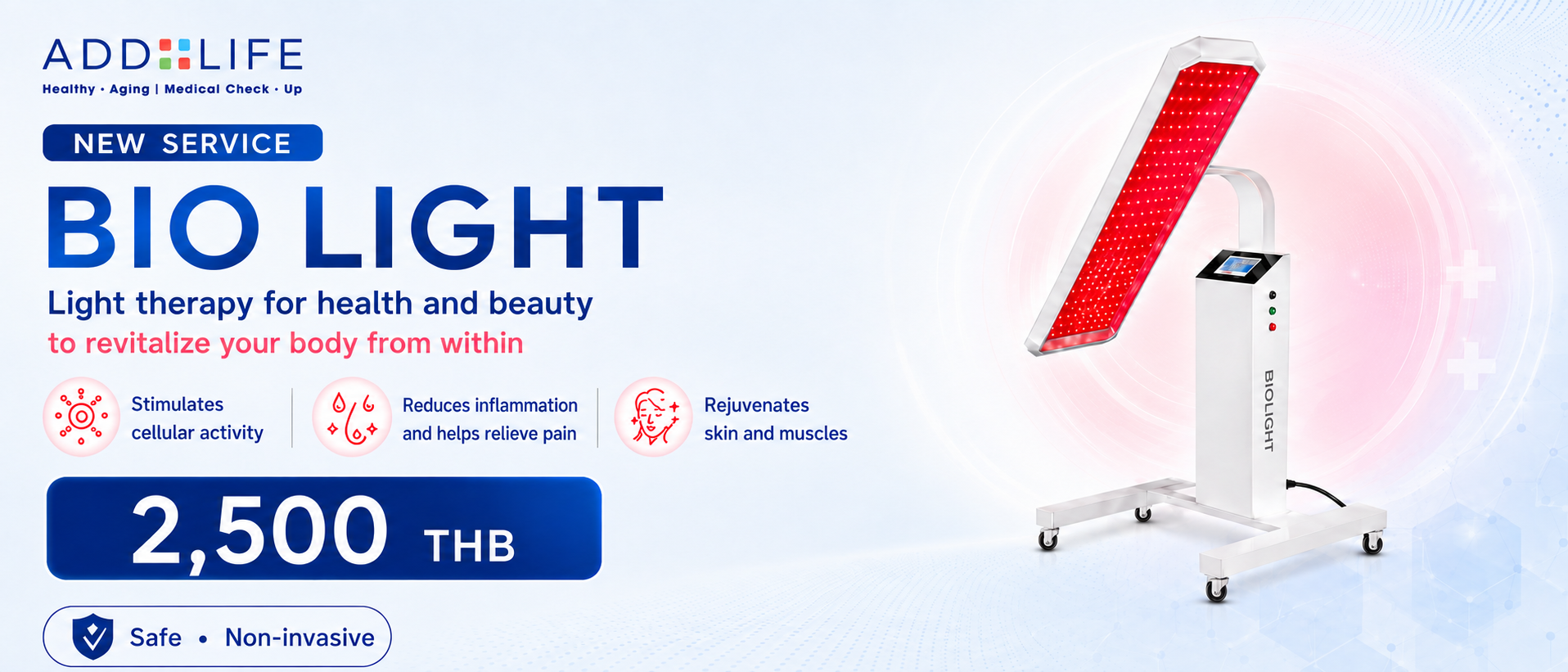
Red Light Therapy: The Power of Red Light to Support the Body’s Recovery at the Cellular Level
Today, Red Light Therapy, or Photobiomodulation (PBM), is receiving increasing attention in the areas of health, skin care, and physical recovery because it is a technology that does not involve needles, surgery, or ultraviolet radiation.
This technology uses red light together with Near-Infrared Light, or NIR, within appropriate wavelength ranges to stimulate biological responses within cells.
Red light generally acts on the skin and superficial tissues, while near-infrared light can penetrate more deeply into tissues. It is therefore often used to support the care of muscles and joints and the body’s recovery.
How Does Red Light Therapy Work?
Our cells contain mitochondria, which act as their energy-producing centres. When cells receive light within an appropriate wavelength range, the light energy may help support mitochondrial function and the production of energy in the form of ATP, or Adenosine Triphosphate.
ATP is an important source of energy used by cells in various processes, such as tissue repair, the production of new cells, and the maintenance of internal balance within the body.
In addition, red light may help support local blood circulation and the skin’s natural collagen-production processes.
However, outcomes depend on several factors, including the wavelength, light intensity, duration, treatment area, and the physical condition of each individual.
Potential Benefits of Red Light Therapy
1. Helps Restore Skin Health and Support Collagen Production
Red light may help stimulate the function of fibroblast cells, which play a role in producing collagen and elastin. It may therefore help the skin appear smoother, more elastic, and healthier when used consistently at an appropriate energy level.
Red Light Therapy should be used as part of a holistic skin-care approach, together with sun protection, adequate rest, and skin care provided according to a physician’s recommendations.
2. Supports Muscle Recovery
Red light and near-infrared light have received attention among individuals who exercise or use their muscles intensively because they may help support muscle recovery, reduce feelings of fatigue, and relieve post-exercise soreness in some cases.
However, Red Light Therapy should not be used as a substitute for warming up, stretching, appropriate nutrition, or adequate rest.
3. Supports Tissue Repair
Photobiomodulation may help support local blood circulation and the body’s natural tissue-repair processes. It has therefore been studied for wound care and recovery following certain types of injuries.
It should be used as complementary care under the assessment of a healthcare professional and should not replace standard treatment.
4. Helps Relieve Certain Types of Pain and Inflammation
Red Light Therapy may help regulate inflammatory processes and the perception of pain. It has therefore been studied in individuals with muscle pain, joint pain, or discomfort resulting from physical activity.
Outcomes may vary between individuals and depend on the treatment area, duration, and selected programme.
5. Supports Relaxation and Rest
Receiving light through an appropriate programme may help promote relaxation and support the quality of rest.
Certain types of equipment allow the light intensity, frequency, and duration to be adjusted according to each individual’s objectives.
Individuals with chronic sleep problems should also undergo an assessment to identify the underlying cause. Red Light Therapy should not be used as a substitute for the diagnosis or treatment of sleep disorders.
Red Light Therapy is not a universal treatment, but it can be another option for supporting holistic healthcare in the areas of skin health, relaxation, and physical recovery.
The key is not to use the highest possible level of light. Rather, it is to select the wavelength, light intensity, frequency, duration, and number of sessions that are appropriate for each individual’s objectives and physical condition.
To achieve appropriate outcomes, individuals should undergo an assessment by a physician before beginning the service. The selected programme, energy level, duration, and number of sessions should be considered according to each individual’s health condition and objectives. This is important for both the safety and effectiveness of care.